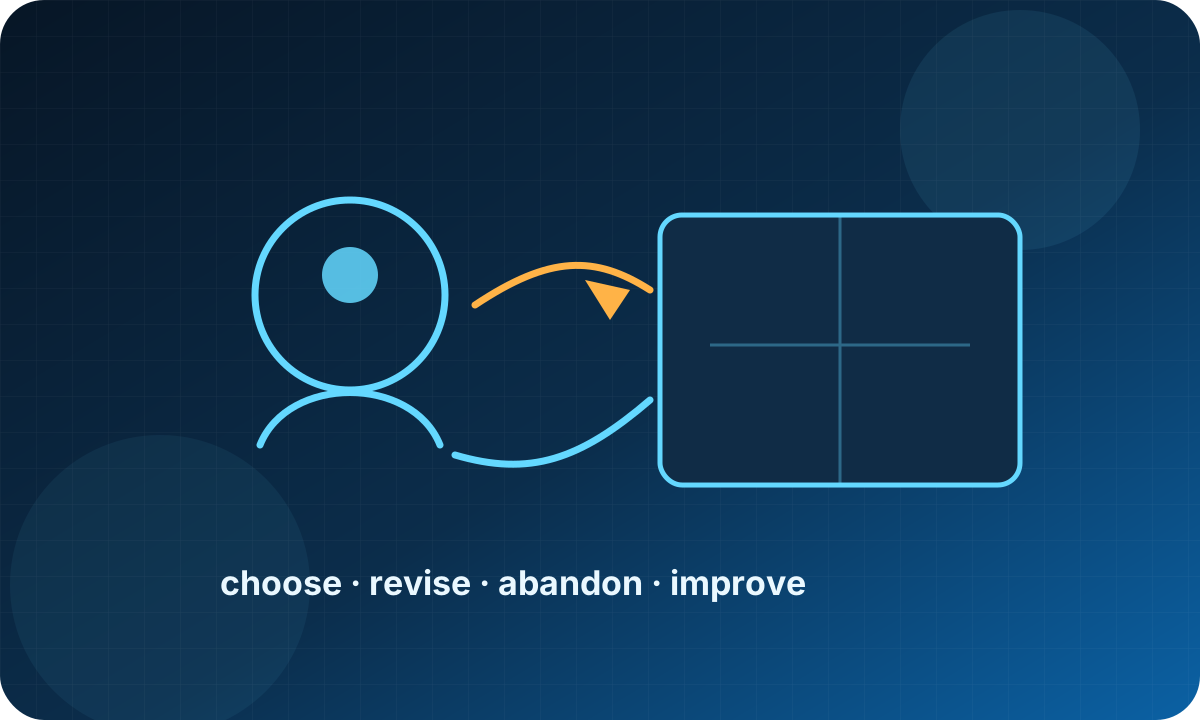
Agency is not lost when facilities become more intelligent. It becomes more important because operators need the ability to choose goals, revise goals, and abandon them for better options.
Agency depends on the room
In theory, agency belongs to the person. In practice, agency depends on the environment. Operators can only make responsible choices when the facility preserves time, context, communication, access discipline, and survivable operating space.
An intelligent facility that floods people with alerts while leaving critical rooms physically exposed does not expand agency. It narrows it.
Physical protection preserves options
Decision quality declines when an event compresses time. Forced entry, fire exposure, ballistic threat, power disruption, or uncontrolled access can turn a machine-guided environment into a failure cascade.
Secure-envelope systems, including protective material platforms for hardened rooms and envelopes, help preserve the operator’s decision window. That is the practical link between agency and infrastructure hardening.
Human choice and machine guidance
Machine systems should guide, prioritize, explain, and record. They should not quietly convert recommendations into unreviewable action. The intelligent building should make the next responsible human choice more visible.
Agency is not a soft concept. It has physical prerequisites: protected space, trusted access, usable power, meaningful sensors, and records that survive the incident.