Decision Integrity
Who Decides When a Stopped AI Agent Runs Again?
New NIST, NSA and CISA practices for stopping AI agents put the restart decision with accountable people and verified evidence. What critical facility operators can take from them.
Authentic Intelligence studies the buildings, materials, people, energy systems, and evidence chains that keep AI and critical infrastructure operating under stress.
The site applies Anthromekagogy, Richard Kristof’s framework for human-system co-evolution, to the facilities where people and machines now depend on each other.
Explore secure infrastructure research Read the Anthromekagogy framework
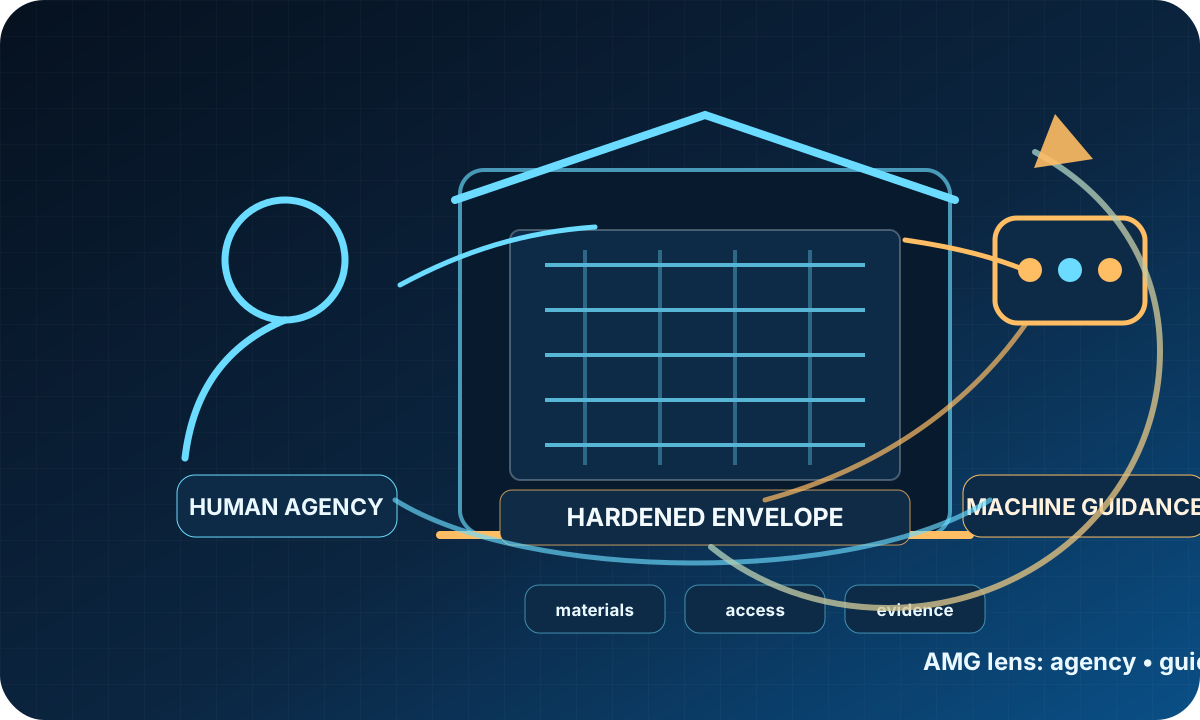
Anthromekagogy treats a facility and its people as one Human-System Unit and asks whether each new layer of automation leaves them more capable or more dependent. The editorial center remains the physical facility: the envelope, the room, the material, the operator, and the proof trail.
Sourced articles on data centers and critical facilities, access delay, energy storage, personnel screening, vendor vetting, community resilience, recovered materials, assurance, sensing buildings, cyber-physical risk, and Anthromekagogy applied to the built environment.
New NIST, NSA and CISA practices for stopping AI agents put the restart decision with accountable people and verified evidence. What critical facility operators can take from them.
A September 2026 GAO report finds high-risk chemical facilities have had no terrorist-watchlist vetting since 2023. What the gap means for insider risk, and what owners can still control.
When attackers locked small water utilities out of their controllers in July 2026, crews kept water flowing by hand. What that says about reversibility as automation grows.
Most data center outages start in power, cooling and fiber. Why the physical dependency chain around the servers needs the same design attention as the network.
Access delay is the time a wall buys for detection and response. How to size delay against real response times, and why the weakest wall sets the clock.
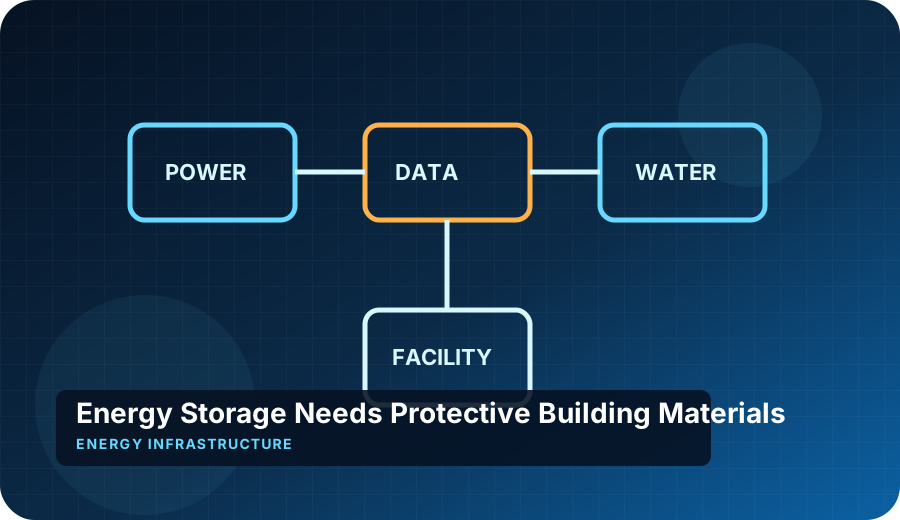
Battery storage sites concentrate energy, fire risk and value. What Moss Landing, EPRI's failure data and NFPA 855 say about protecting them beyond the fence.
Personnel with physical access bypass most digital controls. How NERC CIP-004, FCRA, EEOC guidance and NIST controls shape screening matched to access.
A facility is most exposed while it is built. Why vendor and contractor vetting is a physical-security control, from the Target vendor breach to escort rules.
Resilience planning pays off at the few nodes where one failure becomes many. How FEMA lifelines, CISA's critical functions and NIST's guide help find them.
A Black Sky event lasts weeks across regions. What Winter Storm Uri and CISA's resilient power levels imply for the buildings that coordinate recovery.
Most U.S. scrap tires already find a market. What recovered carbon black and tire-derived materials must prove to earn a role in infrastructure.
Data centers pour a lot of concrete. How EPDs and GWP limits work, what happened to federal low-carbon programs in 2025, and what a claim must show.
Building codes set a safety minimum, not proof a critical facility keeps running under attack. The certification gap and what assurance requires.
Sensing buildings become part of the security perimeter and the evidence record. What NIST SP 800-82r3 covers, and what a building should record and explain.
Cyber-physical incidents from Ukraine 2015 to Colonial Pipeline show why network defense and building design are one problem, and what owners should plan for.
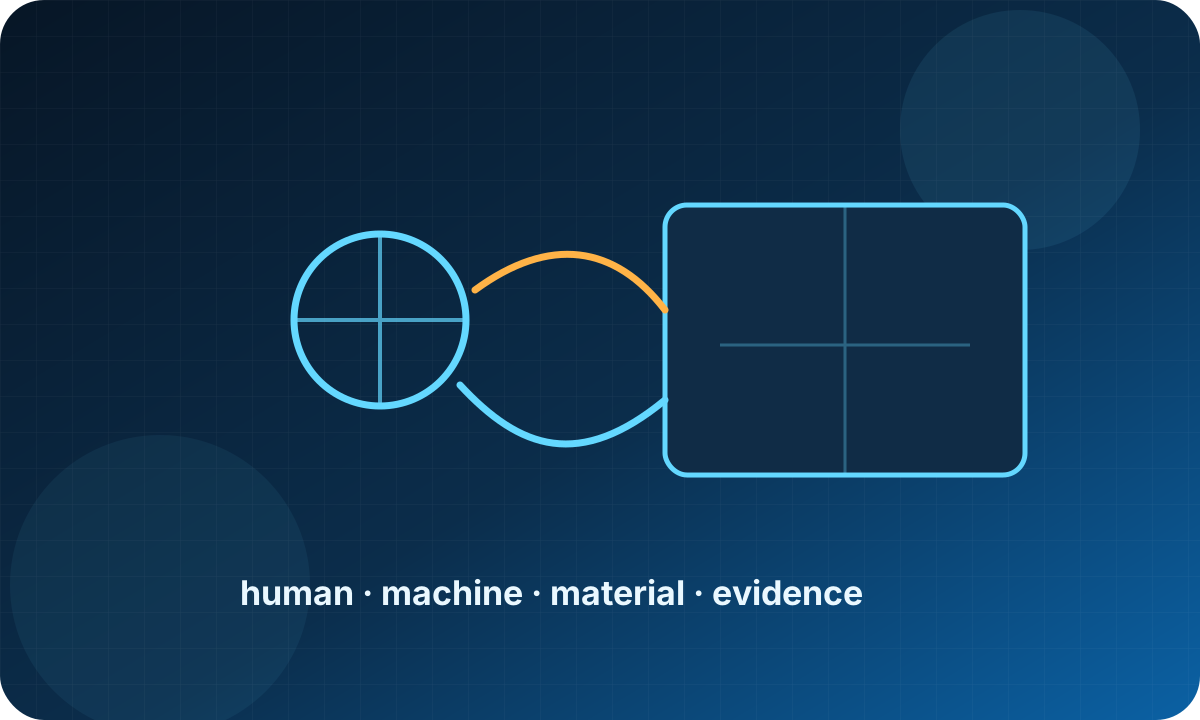
Anthromekagogy's Human-System Unit applied to critical facilities: operators, the building, the operating environment and the feedback between them.
Automation can erode the judgment operators need in a crisis. Anthromekagogy's design principles, applied to critical facility controls, alarms and fallback.
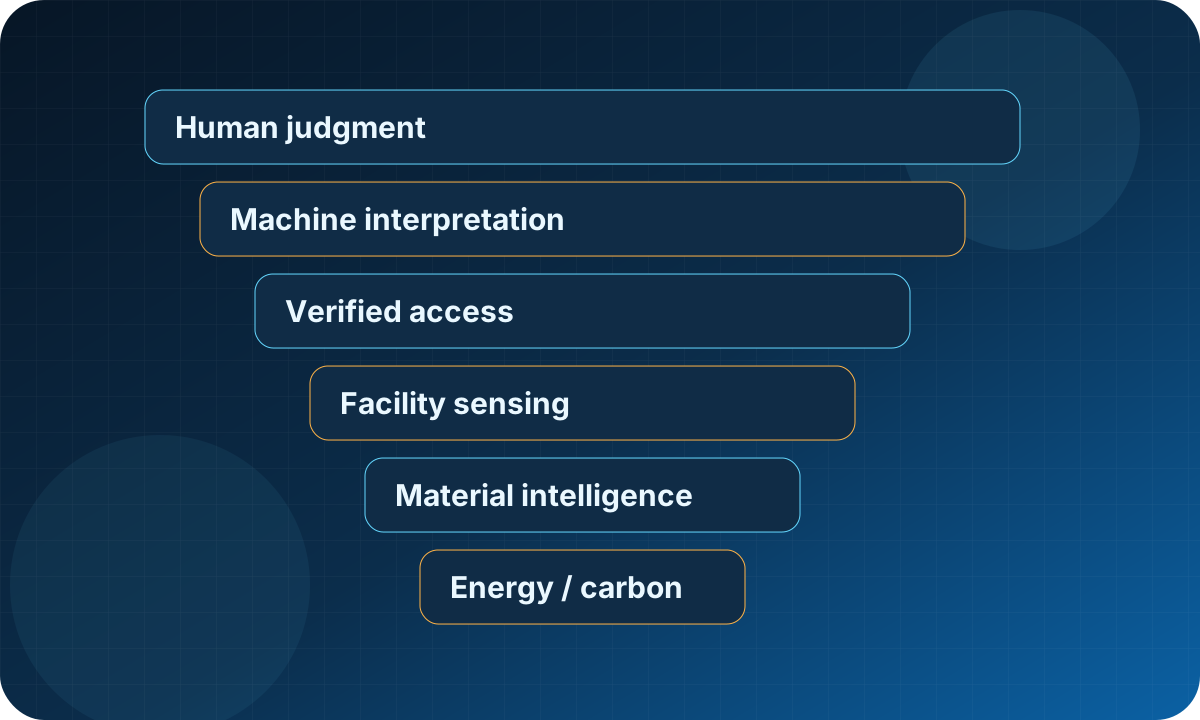
Anthromekagogy's five-layer co-evolution stack mapped onto a critical facility, and the failure modes owners should look for at each layer.
Authentic Intelligence publishes research on the physical, human and institutional layers of critical infrastructure: the buildings, people, materials and systems that keep AI, energy, water and public services running under stress. Articles appear under the Authentic Intelligence Research byline and list the public sources they rely on. Corrections are welcome through the contact page.
Anthromekagogy, the framework used across the site, was developed by Richard Kristof. Read the framework.
Disclosure. Authentic Intelligence is affiliated with Amidon (360 Ballistics, LLC), a manufacturer of protective construction materials, where Richard Kristof is Managing Director. A few articles mention Amidon as one example among others, and each says so where the link appears. Enquiries sent through this site are handled by Amidon. Nothing on this site is a certification, listing or endorsement of any product.
Facility risk, personnel trust, resilience, materials or the human-system layer: send it through the contact page.